
What Makes a Marketing Resume Stand Out to Today’s Top Employers?
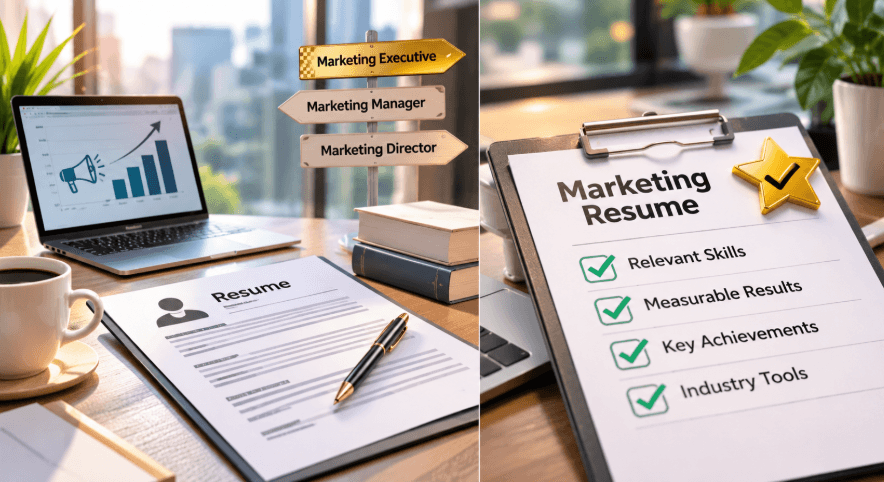
Marketing has become one of the most competitive professional fields, with employers looking for candidates who can combine creativity, strategic thinking and measurable business results. Whether you specialise in digital campaigns, brand development, content marketing or marketing management, your resume needs to communicate your professional value from the very beginning.
A strong marketing resume does more than list previous positions and responsibilities. It demonstrates how you understand customers, contribute to business growth and deliver successful marketing initiatives.
However, presenting these strengths effectively can be challenging. Many professionals have valuable experience but struggle to organise their achievements, highlight their most relevant skills or communicate their impact in a way that attracts recruiters.
If you are finding it difficult to position your experience effectively, expert marketing resume help can make a difference by helping you present your qualifications, achievements and professional strengths more clearly.
1. Start With a Clear and Compelling Professional Summary
Your professional summary is one of the first sections employers review. It should introduce your marketing background, highlight your specialist knowledge and explain the value you can bring to an organisation.
Avoid generic introductions that simply describe you as hardworking, creative or motivated. These qualities are useful, but they do not explain your professional capabilities.
Instead, focus on your experience, marketing specialisation and strongest achievements.
Example: Marketing Specialist
Results driven marketing professional with experience in digital marketing, campaign development, brand communication and audience engagement. Skilled in developing marketing strategies, analysing campaign performance and identifying opportunities to improve customer acquisition and brand visibility. Strong understanding of market trends, content strategy and performance measurement.
Your summary should be relevant to the position you are targeting. A content marketing professional should emphasise content strategy and audience engagement, while a marketing manager should highlight campaign leadership, strategic planning and commercial results.
Keep it concise and make every sentence contribute something meaningful.
2. Focus on Achievements Rather Than Everyday Responsibilities
Employers want to understand what you have accomplished throughout your career. Simply listing routine duties does not demonstrate the level of value you can bring to their organisation.
A stronger approach is to explain your contributions using measurable outcomes wherever possible.
Consider these examples:
Instead of:
- Managed social media accounts and created marketing content.
Write:
- Developed a social media strategy that increased audience engagement by 35% over six months.
Instead of:
- Responsible for website SEO and content optimisation.
Write:
- Improved organic website traffic through keyword research, content optimisation and technical SEO improvements.
Instead of:
- Managed advertising campaigns.
Write:
- Optimised paid advertising campaigns to improve lead quality and reduce customer acquisition costs.
Useful performance indicators include:
- Website traffic growth
- Lead generation improvements
- Conversion rate increases
- Return on advertising spend
- Customer acquisition costs
- Social media engagement
- Email campaign performance
- Marketing revenue contribution
Only include figures that accurately reflect your achievements. If exact numbers are unavailable, explain the improvements you helped deliver without inventing statistics.
3. Highlight the Marketing Skills That Match Your Target Role
Marketing includes several specialisations, and each requires a different combination of skills. Your resume should prioritise the abilities that are most relevant to the position.
Digital Marketing Skills
- Search engine optimisation
- Paid search advertising
- Social media marketing
- Email marketing
- Content marketing
- Marketing automation
Strategic Marketing Skills
- Market research
- Competitor analysis
- Brand positioning
- Customer segmentation
- Campaign planning
- Marketing strategy development
Creative and Communication Skills
- Copywriting
- Content development
- Brand storytelling
- Visual communication
- Presentation skills
- Public relations
Management and Leadership Skills
- Project management
- Team leadership
- Budget management
- Stakeholder communication
- Strategic decision making
- Performance analysis
Avoid including every skill you have encountered. Select the ones that genuinely represent your capabilities and match the requirements of the job.
See also: What Makes a Marketing Resume Stand Out to Today’s Top Employers?
4. Demonstrate Your Understanding of Marketing Tools
Modern marketing professionals are expected to work with different platforms, technologies and analytical tools.
Including relevant tools in your resume can help demonstrate your technical knowledge and ability to contribute to marketing operations.
Consider organising them into categories:
| Category | Examples |
| SEO | Ahrefs, Semrush, Google Search Console |
| Analytics | Google Analytics 4, Looker Studio |
| Advertising | Google Ads, Meta Ads Manager |
| CRM | HubSpot, Salesforce |
| Email Marketing | Mailchimp, ActiveCampaign |
| Content Management | WordPress, Shopify |
| Design | Canva, Adobe Creative Cloud |
| Social Media | Buffer, Hootsuite |
Mention only tools you have genuinely used. Where possible, explain how you applied them in your previous roles.
For example, instead of simply listing Google Analytics, describe how you used performance reports to identify traffic trends, understand audience behaviour or improve campaign decisions.
5. Make Your Resume Relevant to Applicant Tracking Systems
Many employers use applicant tracking systems (ATS) to organise applications and identify candidates whose experience matches job requirements.
A well structured resume can help recruitment software interpret your professional information more effectively.
Follow these practical guidelines:
- Use standard headings such as Professional Summary, Work Experience, Skills and Education.
- Choose a clear and readable font.
- Avoid complicated graphics and excessive decorative elements.
- Use consistent formatting throughout the document.
- Include relevant terms from the job description naturally.
- Follow the employer’s preferred file format.
For example, if an employer is looking for experience in campaign management, brand development and marketing analytics, include these terms where they accurately describe your background.
Keyword optimisation should always support the actual content of your resume. Repeating phrases unnecessarily can make your writing appear unnatural.
6. Tailor Your Resume to the Position You Want
Sending the same resume to every employer is a common mistake. Different marketing positions require different professional strengths, even when they belong to the same department.
A targeted resume allows you to prioritise relevant experience and demonstrate why you are suitable for a particular opportunity.
For a Digital Marketing Role
Focus on SEO, paid advertising, campaign optimisation, analytics and digital growth.
For a Content Marketing Role
Highlight content strategy, copywriting, editorial planning, audience research and content performance.
For a Brand Marketing Role
Emphasise brand positioning, customer insights, market research and campaign development.
For a Marketing Manager Role
Showcase team leadership, campaign coordination, budget management and strategic planning.
For a Marketing Director Role
Prioritise executive leadership, commercial performance, revenue contribution and long term marketing strategy.
Before applying, compare your resume with the job description and make sure your strongest relevant qualifications are easy to find.
7. Present Your Professional Experience Clearly
Your work experience section should communicate your career progression and explain how your responsibilities have developed over time.
Use reverse chronological order, beginning with your most recent position.
For each role, include your job title, employer, employment dates and relevant achievements.
Keep descriptions concise and use action focused language.
Useful action verbs include:
- Developed
- Managed
- Led
- Implemented
- Optimised
- Increased
- Coordinated
- Analysed
- Directed
- Delivered
For example:
Marketing Manager
- Led integrated marketing campaigns across digital and traditional channels.
- Developed content strategies to strengthen brand communication.
- Managed campaign budgets and monitored performance indicators.
- Collaborated with sales and creative teams to improve marketing effectiveness.
- Analysed customer data to identify opportunities for business growth.
Focus on the responsibilities and results that demonstrate your suitability for your next position.
8. Use a Marketing Portfolio to Support Your Application
A portfolio can provide additional evidence of your marketing capabilities, especially if your experience involves creative work, campaign development or digital strategy.
It gives employers an opportunity to review examples of your work and understand how you approach professional challenges.
Depending on your specialisation, your portfolio could include:
- Digital marketing campaigns
- Published content and articles
- Social media projects
- Brand development examples
- Email marketing campaigns
- SEO case studies
- Advertising performance summaries
- Website improvement projects
For each example, explain the objective, your contribution and the outcome.
If you have worked with confidential clients, remove sensitive information or use anonymised case studies. Your portfolio should demonstrate your abilities without compromising professional confidentiality.
9. Show How You Understand Customers and Business Goals
Marketing is not simply about promoting products or publishing content. Successful marketing professionals understand their audiences and develop strategies that support wider business objectives.
Employers value candidates who can connect customer needs with organisational goals.
Your resume can demonstrate this through experience in:
Customer Research
Explain how you have identified customer preferences, analysed market behaviour or developed audience segments.
Campaign Strategy
Highlight your ability to plan campaigns around specific business objectives.
Brand Development
Show how your work has supported brand awareness, customer trust or market positioning.
Performance Analysis
Describe how you have used data to evaluate results and improve future marketing activities.
Business Collaboration
Include examples of working with sales, product development, customer service or senior management teams.
These details help demonstrate that you understand the wider purpose of marketing rather than focusing exclusively on individual tasks.
10. Avoid Common Marketing Resume Mistakes
Even professionals with impressive backgrounds can weaken their applications through avoidable mistakes.
Some common issues include:
Using Generic Statements
Descriptions such as responsible for marketing activities do not explain your actual contribution.
Including Too Much Irrelevant Information
Prioritise experience that supports the position you want rather than including every responsibility from your career.
Ignoring Results
Whenever possible, demonstrate how your work contributed to measurable improvements.
Overusing Industry Keywords
Relevant terminology is important, but it should appear naturally within your professional experience.
Using Poor Formatting
Inconsistent fonts, spacing and headings can make your resume difficult to read.
Submitting an Unproofread Document
Grammar mistakes, incorrect dates and spelling errors can create an unprofessional impression.
Review your resume carefully before submitting an application. A clear, accurate and well organised document helps employers focus on your qualifications rather than presentation problems.
11. When Professional Marketing Resume Assistance Is Worth Considering
Writing a strong resume requires more than good grammar. It involves understanding recruitment expectations, identifying valuable achievements and communicating professional experience in a way that makes sense to employers.
Some marketing professionals have managed successful campaigns, developed brands and contributed to business growth but struggle to present those achievements effectively.
Professional assistance can help turn complex experience into a structured and compelling career document.
Expert marketing resume help may be particularly useful when you are:
- Applying for competitive marketing positions.
- Moving into a new marketing specialisation.
- Pursuing management or director level opportunities.
- Transitioning from another industry.
- Returning to employment after a career break.
- Applying for opportunities in international markets.
When choosing a professional, look for relevant marketing industry knowledge, personalised writing and a clear understanding of ATS requirements.
Your resume should accurately represent your achievements and professional identity. Good writing improves how your experience is communicated without exaggerating your capabilities.
12. Keep Your Marketing Resume Updated
Marketing is a constantly developing profession. New technologies, changing consumer behaviour and evolving digital platforms influence the skills employers expect from candidates.
Your resume should reflect your current professional capabilities rather than relying entirely on experience gained several years ago.
Consider updating it whenever you:
- Complete an important marketing campaign.
- Achieve measurable business results.
- Learn a new marketing platform.
- Gain a professional qualification.
- Take on additional responsibilities.
- Lead a significant project.
- Develop new strategic or leadership capabilities.
Keeping your resume updated also makes it easier to respond to suitable opportunities without having to rewrite your entire career history.
For additional industry insight, the American Marketing Association provides resources covering marketing knowledge, professional development and industry practices.
Conclusion: Build a Resume That Reflects Your Marketing Value
A competitive marketing resume should communicate your professional strengths, demonstrate your achievements and show how your experience connects with the needs of potential employers.
Focus on relevant skills, measurable results, clear career progression and a professional presentation. Tailor your content to each opportunity and ensure that your experience reflects the expectations of the position you want.
Remember, employers are not simply looking for people who understand marketing terminology. They want professionals who can develop effective strategies, understand customers and contribute to meaningful business outcomes.
When your resume communicates these qualities clearly, it becomes a stronger representation of your professional value and can help you move towards your next career opportunity.